OpenSSL is a software library for applications that provide secure communications over computer networks against eavesdropping, and identify the party at the other end. OpenSSL is a versatile command line tool that can be used for a large variety of tasks related to Public Key Infrastructure (PKI) and HTTPS (HTTP over TLS).
| Tool | Description |
|---|---|
| EJBCA | Open-source public key infrastructure (PKI) |
| KeyStore Explorer | Replacement for the Java command-line utilities keytool |
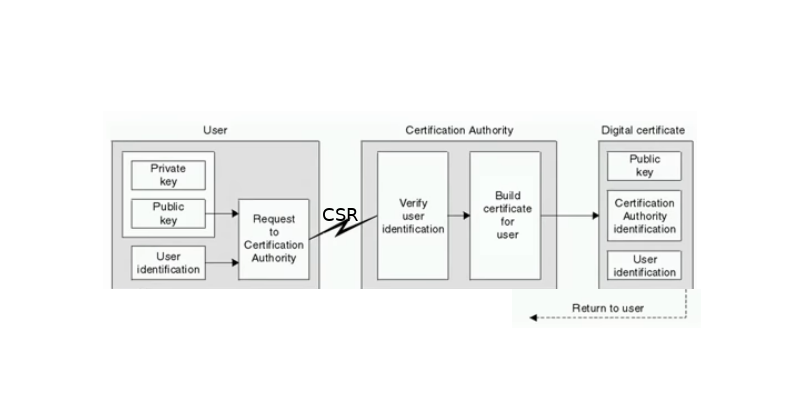
Self sign certificate
- Create new self-signed certificate.
openssl req -newkey rsa:2048 -new -nodes -x509 -days 3650 -keyout key.pem -out cert.pem- Verify CA
openssl x509 -noout -text -in ca/public/name.crt
#output
 X509v3 Basic Constraints: critical
CA:TRUE- Verify certificate
openssl verify -CAfile ca/public/name.crt k8s/ca-cert.pem- Display certificate text
openssl x509 -in /etc/ssl/certs/name.crt -text - Display CSR information
openssl req -noout -text -in <name>.req- Convert crt ⇒ pem
openssl x509 -in k8s/ca-key.crt -out k8s/ca-key.pem -outform PEM- Extract CSR from certificate
openssl x509 -x509toreq -in name.crt -signkey name.key -out name.csrCreate certificates
RootCA
- Root Private key
- Root Certificate
- CSR (Certificate Signing Request) ⇒ .req o .csr
- Create folder
mkdir ca/<name>- Create Key
openssl genrsa -out ca/<name>.key 2048- Create CSR
openssl req -new -key ca/<name>.key -out ca/<name>.reqopenssl req -new -key ca/<name>.key -out ca/<name>.req -config ca/<name>.cnf- Verify Sign with the key
openssl req -verify -in ca/<name>.req -text -noout- Sign CSR with the CA (this automatically add new line into .txt database)
openssl ca -config ca/node.cnf -out ca/issued/name.crt -infiles ca/<name>.reqopenssl ca -config ca/node.cnf -out ca/issued/name.crt -extensions v3_req -infiles ca/<name>.req- Verify the certificate
openssl x509 -noout -text -in ca/issued/name.crt- Verify the connection
openssl s_client -connect <name>:443 -CAfile /etc/ssl/certs/<ca-name>.crt
echo | openssl s_client -connect redhat.com:443 2>/dev/null | openssl x509 -noout -ext subjectAltName
Intermediate CA
- Create intermediate CA
openssl genrsa -out intermediate/private/intermediate.key 4096- Modify permissions
chmod 400 intermediate/private/intermediate.key- Create CSR (from cnf)
openssl req -config intermediate/intermediate.cnf -new -sha256 -key intermediate/private/intermediate.key -out intermediate/certificates/intermediate.csr- Sign CSR with the CA (this automatically add new line into .txt database)
openssl ca -config node.cnf -extensions v3_intermediate_ca v3_req -notext -md sha256 -in intermediate/certificates/intermediate.csr -out intermediate/certificates/intermediate.crt- Modify permissions
chmod 444 intermediate/public/intermediate.crt- Verify intermediate CA
openssl x509 -noout -text -in intermediate/certificates/intermediate.crt
openssl verify -CAfile public/<ca-name>.crt intermediate/public/intermediate.crt
Keytool
- Convert p12 ⇒ jks
keytool -importkeystore -srckeystore certificate.p12 -srcstoretype pkcs12 -destkeystore cert.jks- List certificates inside jks
keytool -list -keystore generic.jks -v- List CA
keytool -list -keystore $JAVA_HOME/lib/security/cacerts -storepass changeitP12
- Convert crt ⇒ .p12
openssl pkcs12 -export -clcerts -inkey client.key -in client.crt -out client.p12 -name "MyKey"- See content of a .p12
openssl pkcs12 -info -nodes -in yourfilename.p12 -passin pass:password- List .p12
keytool -list -v -keystore test.p12 -storepass password -storetype PKCS12- List jks
keytool -v -list -keystore test.jks -storepass password- Extract certs
openssl pkcs12 -in path.p12 -out newfile.crt.pem -clcerts -nokeys- Extract keys
openssl pkcs12 -in path.p12 -out newfile.key.pem -nocerts -nodesCNF
User critical for force to in this case load the custom CA.
[v3_req]
subjectAltName                  = critical, @alt_names
basicConstraints                = critical, CA:FALSE
keyUsage                        = critical, digitalSignature, keyEncipherment, keyAgreement
extendedKeyUsage                = critical, serverAuth, clientAuth
subjectKeyIdentifier            = critical, hash
authorityKeyIdentifier          = critical, keyid, issuer