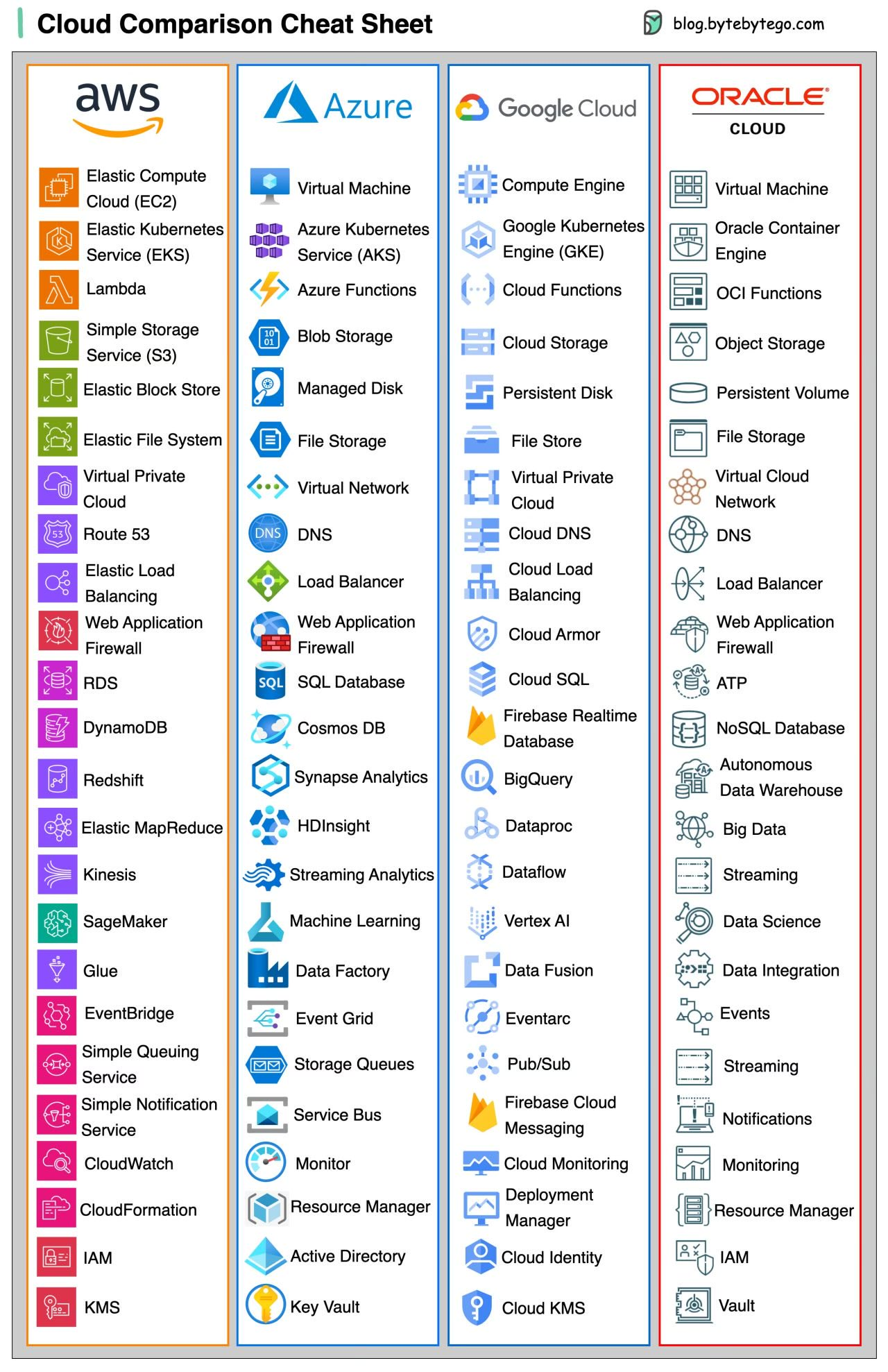
Cloud architecture helps provide a structure to cloud computing solutions, freeing businesses from any reliance on physical data centers and any other infrastructure. The right architecture improves the business-customer relationship by optimizing the user experience at the front end of the cloud computing solution while also optimizing back-end operations with servers, solutions, and storage.
Providers
Hostings and VPS
Cost Reduce
- Cache external dependencies locally to reduce network transfer costs. For example, use pull-through Docker image registries.
- Prefer spot instances for stateless workloads instead of on-demand instances.
- Use automated scaling solutions to shut down development workloads during weekends when possible.
- Filter logs, metrics, and traces before they reach your monitoring solution. Most solutions (SaaS or self-hosted) charge for storage and ingestion since the SSD/HDD space is the least expensive resource of AWS instead of RAM.
- Optimize your application to reduce CPU hotspots and memory leaks—this can significantly cut infrastructure costs. The same applies to database queries and caching.
- Use a profiler to identify inefficiencies:
- JProfiler is great for finding CPU hotspots, memory leaks, and slow DB queries in Java applications.
- Flamegraphs provide similar insights across multiple languages.
- Identify inefficient code that leads to unnecessary cloud resource consumption. Whether it’s performance bottlenecks or excessive database queries, Digma helps teams optimize before deployment, avoiding costly inefficiencies.
- The best way to save money is by preventing unnecessary asset creation. Implement asset management workflows and approval processes to control resource allocation.
- Plan ahead—understand the cost implications of standing up resources. Estimate network transit costs and other variables. Effective cost management comes from proper planning and proactive monitoring, not reactive billing analysis.
- Managed services or A managed: you can use only one managed service, like a stable load balancer but keep in mind that a managed service can increase costs.